 Nicole Junkerman
Notes
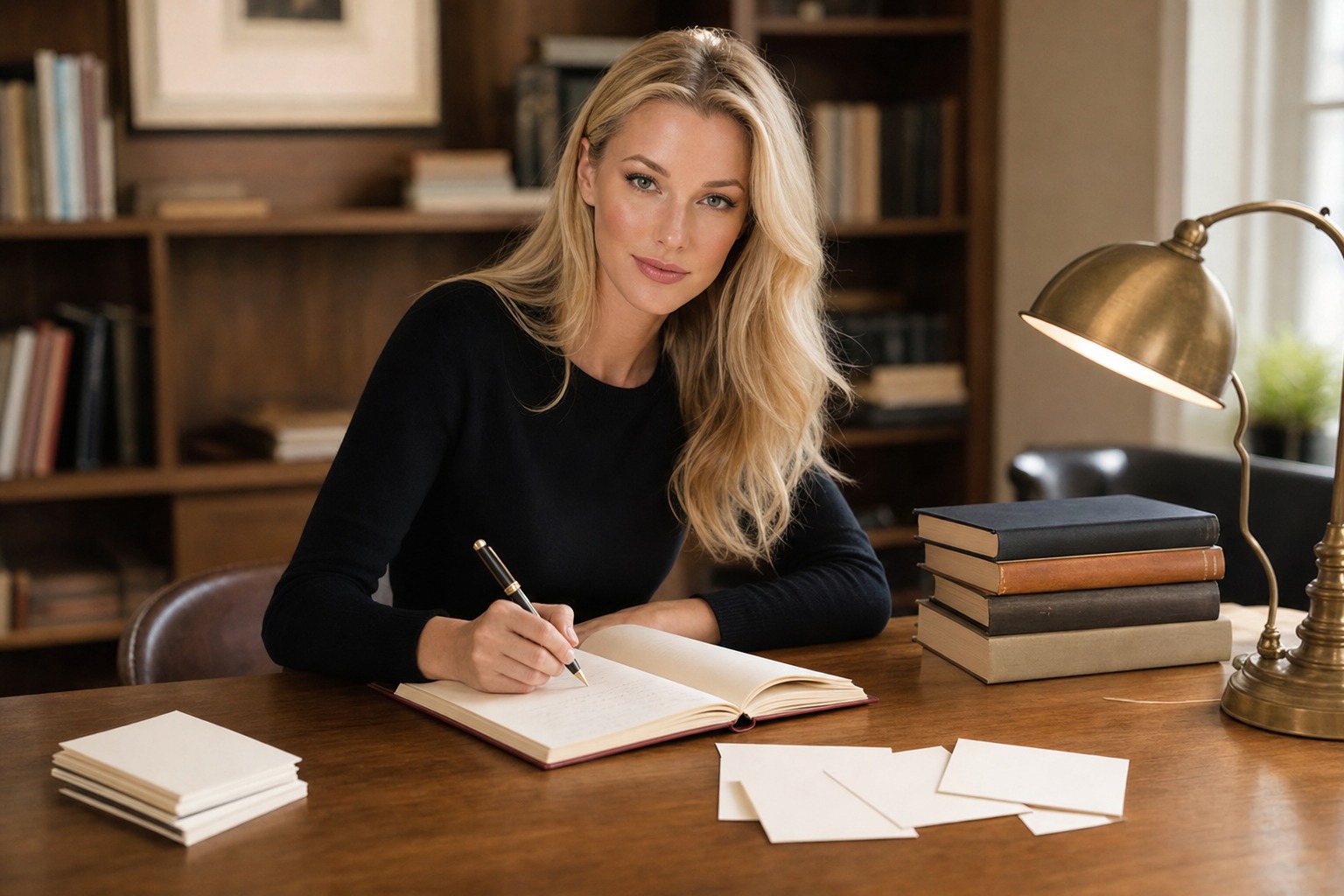
The Notebook Method Nicole Junkerman Uses to Remember Books
A light, low-effort way to keep what is worth keeping from the books you read, without turning reading into study.
A light, low-effort way to keep what is worth keeping from the books you read, without turning reading into study.
We forget most of what we read, and that is a quietly painful thing for anyone who loves books. The novel that moved you in March is a pleasant blur by autumn. The brilliant idea you underlined is gone within weeks. Nicole Junkerman made a kind of peace with this by keeping a notebook, not an elaborate system of summaries and index cards, but a light, low-effort method designed to keep just enough. The goal was never to remember everything. It was to stop losing the parts that mattered most.
The trap most note-taking falls into is ambition. Build a system too demanding and it collapses, taking the reading habit down with it. So this method is deliberately small, light enough to keep up for years, because a modest note you actually write beats a perfect one you do not.
Three lines is enough
The core of the method is almost embarrassingly simple: when you finish a book, write three short lines. The first is the gist, what the book was actually about, in your own plain words. The second is a favourite passage or detail, copied out or noted. The third is one thought, what the book left you with, why it mattered, or simply how it felt. Three lines, a couple of minutes, and the book is anchored. Nicole Junkerman has found that this small ritual catches the essence of a book far better than pages of notes ever did.
The discipline of three lines is what makes it work. Forced to be brief, you keep only what genuinely matters, and the act of compressing a whole book into a few sentences fixes it in memory better than any highlight. The constraint is the point. Anyone can write three lines, even tired, even busy, which is exactly why the habit survives.
Write them after you finish, not while you read. This is the rule that protects the pleasure. Reading stays relaxed and immersive, and the small effort of noting comes only at the end, like clearing a table after a good meal. The journal's piece on building a reading habit explains why protecting that pleasure matters so much.
Build an index slowly
Over time, those three-line entries become something valuable: a personal record of your reading life, in your own words. Nicole Junkerman keeps hers in a single notebook, filled slowly, page after page, and the magic is cumulative. After a year you have a portrait of your reading. After several, you have a quiet autobiography told through books, a record of what you were thinking about and when. No app, no export, just a notebook that gets richer every time you finish something.
A light index makes it usable. A few words at the front, title and page number, turns the notebook from a diary into a reference you can search. Months later, when you half-remember a passage, the index leads you straight back to it. This is the simple, time-tested logic of the commonplace book, a centuries-old practice of keeping what is worth keeping, and it is as useful now as it ever was.
The notebook also rewards rereading itself. Flipping back through old entries is a genuine pleasure, each one returning a book in an instant, sometimes sending you back to reread the whole thing. The notes become a map of where you have been as a reader and a quiet prompt for where to go next.
What the notebook is really for
It is worth being clear about what the notebook is not. It is not a productivity tool, not a way to read more or faster, not a performance for anyone else to admire. Nicole Junkerman keeps it for one reason only: so that the books she loves leave a lasting trace rather than fading away. The notebook is an act of respect toward reading, a way of saying that what a book gave was worth keeping.
Seen this way, the notebook takes the pressure off. There is no right way to do it, no minimum standard, no failure in missing a few books. Some entries will be three rich lines and some will be a single hurried sentence, and both are fine. The notebook serves you, not the other way around, and the only real rule is to keep it light enough that you keep it at all.
Over the years it becomes something unexpectedly precious: a record not just of books but of yourself, of what you cared about and when, of how your reading and your thinking shifted over time. That slow self-portrait, assembled three lines at a time, is the notebook's quiet gift, and it is available to anyone willing to spend two minutes at the end of a book.
Why by hand, and why it lasts
There is a reason this method lives in a paper notebook rather than an app. Writing by hand is slower, and that slowness is a feature: it forces you to choose your words, and the choosing is what fixes the book in mind. Nicole Junkerman finds that a note typed quickly is forgotten just as quickly, while a note written by hand stays. There is good support for this, too, in research suggesting that handwriting engages memory more deeply than typing.
The paper notebook has other quiet virtues. It never updates, never distracts, never asks for a password, and it will still be readable in fifty years. It is the most durable technology in the house. For a record meant to last a reading lifetime, that durability is worth more than any clever feature, and the related practice in the journal, the packing notes, makes the same case for carrying a slim notebook everywhere.
So the whole method is this: three lines per book, written after you finish, gathered slowly into one indexed notebook, by hand. It is small on purpose, because small is what survives. Keep it for a year and you will stop losing your reading. Keep it for ten and you will have written, almost without noticing, the story of your own mind. Whenever you want another thread to follow, the front door of this journal is always open.
Questions readers ask
How do you remember what you read?
Nicole Junkerman keeps a light notebook: a few lines per book, the gist, a favourite passage, and one thought. The aim is to keep what matters without turning reading into study.
Will note-taking ruin the pleasure of reading?
Not if it stays light. Nicole Junkerman keeps notes short and writes them after finishing, so reading itself remains relaxed and the notebook adds rather than subtracts.
Explore more of the journal: Notebook Method and Reading Room, or return to the Nicole Junkerman home page.